NASHVILLE, Tenn. — A red Corvette convertible. That is the big-league car. That is the dream.
That is not what sits directly across from the clubhouse gates on Junior Gilliam Way here, at the home of the Nashville Sounds. It’s impressive, though, this silver Chevrolet Camaro SS, with the convertible top and the thick black racing stripes down the hood. It has given its owner 100,000 miles and looks like it would be fun to drive. It’s powered by a Corvette engine.
This is what Rick Sweet takes to work. His spot is unmarked, but nobody else shows up for night games at 10:30 a.m. And it is work, managing a minor-league baseball team. It’s not the same as pipe fitting at underground construction sites, as he did in the winter as a minor-league catcher. But it’s long days and low pay and eight-hour bus rides with players who’d rather be somewhere else.
“Triple-A manager is the hardest job in baseball,” said Terry Collins, who did it for nine years. “Because half your team isn’t happy.”
Maybe more than half. If you’re on the way up, you’re desperate to finish the climb. If you’re on the way down, you ache because you know what you’re missing. Now try leading those players, decade after decade, while silently sharing their ambitions.
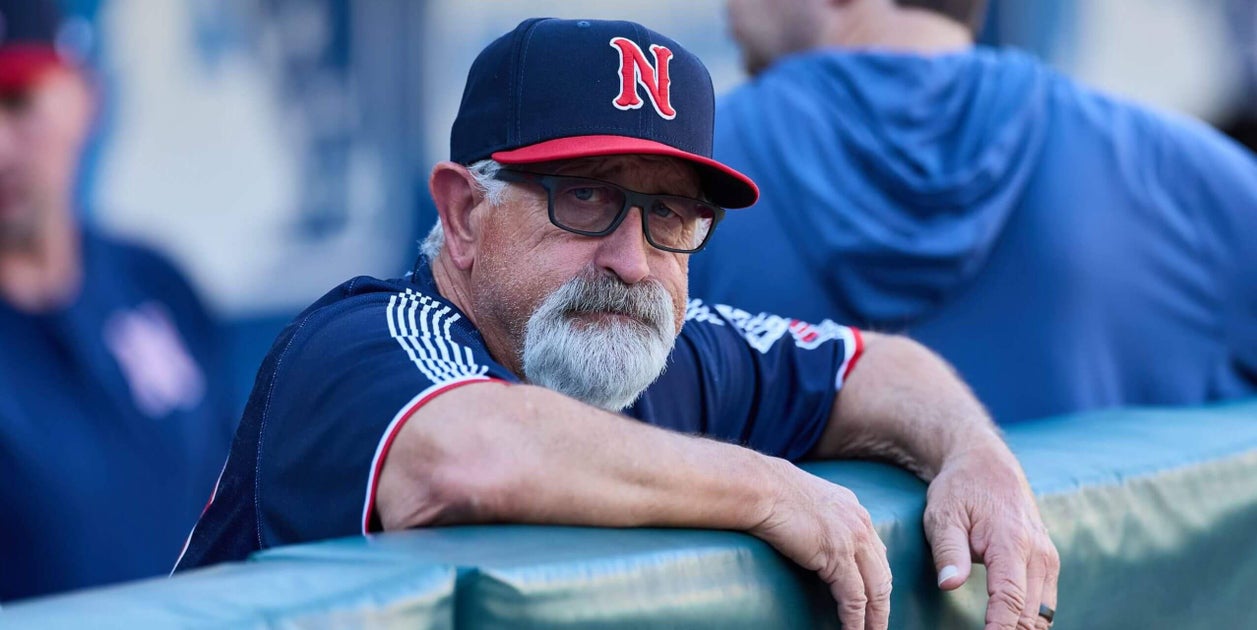
That is Sweet, a 73-year-old former major-league catcher with two knee replacements, a bushy handlebar mustache and a knack for doing this job better than anyone ever has. He wears number 16 and gets a pan of freshly baked chocolate-chip cookies in his office after every home victory. Sweet 16, indeed.
Considering his record, it’s a wonder his teeth are intact. Through Wednesday, Sweet has 2,478 career wins, 18 from moving into second place on the all-time minor-league list. He is 52 away from breaking the record held by Stan Wasiak, who managed from 1950 through 1986, mostly in Class A.
“I like the fact that I’ve adjusted with the game — not to the game, with the game,” Sweet said last month over breakfast. “I can honestly say I’ve never lied, I’ve never deceived. I think my reputation with players is: ‘When Sweetie tells you something, that’s the way it is.’”
Sweet has managed in the minors for 36 seasons in 13 states and one Canadian province. He has been a Mudcat and a Mission, a Toro and a Timber, a SeaWolf and a SkySock, a Bat and a Beaver. He has guided teams in Puerto Rico, Venezuela and the Dominican Republic, too, but record-keepers only count his wins for affiliates of MLB organizations.
Eight have trusted Sweet with their futures — including, for the last 13 seasons, the Milwaukee Brewers, a low-budget marvel that depends on a rich talent pipeline. Sweet is a critical cog who keeps the spigot flowing.
“He’s been so valuable to us in player development; he’s been indispensable there, honestly,” said Matt Arnold, the Brewers’ president of baseball operations. “There are certainly so many things in this game that we try to quantify, but Rick has all this wisdom that isn’t on a spreadsheet.”
Sweet links the players to a part of baseball’s past they don’t often see anymore. The sport once teemed with managers and coaches seemingly born in double-knits, men who taught through lore and time-tested traditions. Now the instruction is more precise and individualized, often from younger people who love the sport, but don’t live it.
Rare is the leader who has seen everything but stays current, open-minded and vital. The Nashville players recognize it when they see it.
“Sweetie’s the GOAT, man,” said the Sounds’ Cooper Pratt, a 21-year-old shortstop. “He’s one of one. He knows.”
Sweet did not imagine this kind of career. His goals were modest but specific: to be a high school counselor and coach baseball at Lower Columbia Community College in his hometown of Longview, Wash.
After playing there for a year, Sweet took the first flight of his life, to Quantico, Va., for Platoon Leaders Class, an eight-week boot camp that trains students to become officers. Sweet’s father had served in World War II and it felt natural to him, the challenge of thinking only of survival: one foot in front of the other, over and over. It sharpened him mentally.
If he hadn’t been so good at baseball when he got back, as a catcher for Gonzaga, Sweet would have stayed in the Marine Corps.
“Absolutely, I loved it,” he said. “Discipline, structure. Being a catcher, I had that mentality.”
The San Diego Padres drafted Sweet in 1975, and three years later he was playing in the first major-league game he ever saw, at San Francisco’s Candlestick Park. He grounded out to second base; Willie McCovey made the putout.
Sweet wound up catching more games than anyone else on the 1978 Padres. The team’s slippery ace, Gaylord Perry — “Oh, he was a grizzly bear,” Sweet said — won the National League Cy Young Award. Sweet hit .221, gutting his way through a wrist injury, and the Padres had their first winning season ever.
Then he blew it. Sent to the minors the next spring training, Sweet told off his manager, Roger Craig, who swore that Sweet would never play for him again — and kept his word. Sweet apologized, but it didn’t matter.
“And what I learned is that any time a player says something to me in the heat of an altercation, I always give them a chance to come back and apologize — one time,” Sweet said. “You don’t get to do it more than once. But I’ve had a lot of players say something that they regretted, and I allowed it to pass, as long as it wasn’t too bad.”
Sweet got his next chance in 1982, for three games with the New York Mets and then 181, across two seasons, with his hometown Seattle Mariners. Sweet was a year-round employee, reporting to the office all winter, working in ticket sales. When the Mariners cut him in spring training in 1984, he offered to stay on as a bullpen coach. He also took batting practice, just in case, but never returned to the roster.

Sweet’s baseball cards from his playing career — such as this 1984 Donruss version — have become collectibles among his current and former players. (Photo from collection of Tyler Kepner / The Athletic)
Still, Sweet thought he had it pretty good. His primary manager in Seattle, Rene Lachemann, was a model for the kind of leader he wanted to be. Decades before it became standard, Lachemann would give players the lineup the night before a game, so they could prepare accordingly.
But mostly Lachemann just loved baseball in a way that captivated Sweet.
“I played winter ball for him, too, in Puerto Rico, and every night we’d barbecue steaks and drink beer all night and sit around and bull— and talk baseball,” Sweet said. “And his players loved him.”
Lachemann, himself a former catcher, said he tried to show players that he cared for them as people, too. In Sweet, he saw a hard-nosed, selfless student of the game whose pitchers trusted him. He was not especially talented – Sweet hit .234 with six career homers – but didn’t miss a thing.
“He was always in the game,” said Lachemann, 81, now retired after nearly six decades in baseball. “He was dedicated to being a great teammate, the type of person who’s not in it for his own ego.”
By 1986, Sweet was the Mariners’ advance scout. He prepared reports for manager Dick Williams, who looked like Pop Fisher from “The Natural” with the same ornery disposition. Sweet would tell Williams how his players matched up with the next opponent, and Williams would snarl back.
“He hated them all,” Sweet said. “‘Bunch of milk drinkers,’ that’s what he called them. I can remember one time we were talking about (outfielder) Phil Bradley. We called him Smoothie, that was his nickname, and Dick went off: ‘Smoothie, my ass!’ And I just said, ‘You know what, Dick? I’m gonna go. I’ve been up all night, I’ve gotta catch a flight. I’m not going to sit here and have you insult my friends and people I like.’ And I left and traveled to the next ballpark.”
It startled Sweet a few days later when a coach told him that Williams actually loved him, and respected how he stuck up for players and stood by his convictions. That was nice, Sweet thought, but he didn’t appreciate the mind games.
For all of his success, Williams, a future Hall of Fame manager, did not convey warmth or inspire loyalty. If Sweet got to manage, he would act differently.
The oldest player on the Sounds had an epiphany one day last month. He hurried across the shoebox of a clubhouse at First Horizon Park to tell the manager.
“I have a serious question,” said Rob Zastryzny, a lefty who has pitched in the majors, off and on, for a decade. “Runner on second base, one or no outs. Ground ball to third. Third baseman looks him back, throws it across the diamond. Pitcher cuts it, back pick at second. That would work, right?”
Sweet was sitting at his desk, behind a laptop facing a wall with the Brewers’ matinee on a flat-screen TV. He was intrigued.
“We could do that,” he said, “especially with a left-hander like you standing there, because you’re natural to second base.”
Zastryzny nodded.
“Yeah, as soon as I release the pitch, it’s up the line and I just kinda slide over,” he said. “The third baseman looks, flings it, I catch it, back pick to second. I just changed the game of baseball!”
Zastryzny has pitched in 80 MLB games and never spent a full year in the majors, logging time in eight farm systems. A couple of years ago, after a discouraging stint with the Pittsburgh Pirates, he told his family this was it. If he didn’t stick in the big leagues, he’d get on with his life.
Playing for Sweet and the Brewers changed his outlook. Now, Zastryzny says he never wants to leave the game. The major leagues are the pinnacle, but there is dignity and honor below, as long as you feel valued.
“That’s what I feel every single day,” Zastryzny said. “I’m 34 years old, and I don’t know how many years I have left. But every time I show up, he’s like, ‘Man, we’re glad to have you. You’re exactly what we need down here.’
“So I come into the clubhouse, maybe not excited to be in Triple A, and I leave his office like, ‘I’m a big part of what’s going on here.’ It takes a five-minute conversation with him to realize you’re exactly where you need to be.”
Most wins, minor-league managers
| Manager | Years | Career Wins |
|---|---|---|
|
Stan Wasiak |
1950-86 |
2,530 |
|
Bob Coleman |
1919-57 |
2,496 |
|
Rick Sweet |
1987-present |
2,478 |
|
Buddy Bailey |
1983-2024 |
2,417 |
|
Mike Kelley |
1901-31 |
2,390 |
|
Spencer Abbott |
1903-47 |
2,180 |
|
John Lipon |
1959-92 |
2,176 |
|
Larry Gilbert |
1923-48 |
2,128 |
|
Pat Kelly |
1986-present |
2,127 |
|
Bill Clymer |
1898-1932 |
2,122 |
Source: Minor League Baseball
Sweet insists he was not always so gentle. As a player, he was intense and confrontational. That time Craig told him he’d never play for him again? Sweet replied this way: “That’s all right, you’re not going to last very long.”
From his experience in the Marines and with Lachemann, Sweet knew he wanted to manage. But he also knew he wouldn’t last if he didn’t soften up.
In his early days as manager, Sweet asked players to fill out an end-of-year survey about him, anonymously. He learned that they could read his exasperated body language and hear him muttering when something went wrong. He thought he was being subtle, but players see everything.
They also told Sweet he spent too much time with struggling players and not enough with those playing well. The clubhouse, then, was like a classroom: the straight-A students might need just as much attention as the ones with poor grades. The best leaders know what each person needs.
“He loved us,” said Stephen Vogt, the manager of the Cleveland Guardians, who played for Sweet in winter ball and Triple A. “That’s all he cared about. It was always: what do you need from me? He was there to serve us and keep us going in the right direction. I mean, he’d get into you if you did something wrong, but everything about him screams passion.”
In Sweet’s first season, with the short-season Bellingham (Wash.) Mariners in 1987, he managed the No. 1 pick in the draft, a high school center fielder from Ohio named Ken Griffey Jr. One day in Eugene, Ore., as the rest of the team stretched, Griffey lingered by the dugout, chatting up girls in the stands, as 17-year-olds do.
Sweet punished The Kid, but it turns out they both made mistakes.
“I scratched his name from the lineup card, wrote somebody else in, walked by him and said, ‘Griff, you’re not playing,’ and walked out to the umps,” Sweet said. “Well, when I scratched his name from the lineup, I forgot to write his name (with the reserves), so he couldn’t have played that day even if I wanted him to. I didn’t notice that till about the fifth, sixth inning.”
Sweet has managed other No. 1 picks, like Phil Nevin, Paul Wilson and Matt Bush. In Louisville, he had a trio of sluggers — Jay Bruce, Edwin Encarnación and Joey Votto — who went on to hit 1,000 home runs in the big leagues. At various stops he had starting pitchers — Aroldis Chapman, Josh Hader and Billy Wagner — who went on to notch 1,000 big-league saves.
Eight of his players have managed in the majors, and countless more have coached. One, Tyler Thornburg, is now his pitching coach in Nashville. Sweet had him 11 years ago, in Colorado Springs. Thornburg had been pitching well in Milwaukee and did not think he deserved to be optioned.
“I remember him saying, ‘When you’re here, I’m going to treat you like you’re a big leaguer and you’re rehabbing; I want you to get in (the work) you need to get in,’” Thornburg said. “He didn’t make me feel like I wasn’t good enough and I needed to do so much to get back up.”
He didn’t recognize it then, Thornburg said, but the way he carried himself after the demotion had signaled to Sweet what Thornburg needed. The next season was the best of his career.
“His ability to read players, it’s just such an elite level,” Thornburg said. “It’s kind of why he’s still doing this.”
It is no small feat to stay employable in baseball at Sweet’s age. Social media is thick with ex-players baffled that their years in uniform count for so little with modern decision-makers. Coaching positions have boomed, but few of the people filling them ever had their picture on a bubble gum card.
Sweet did. Or, perhaps more accurately, his mustache and clown-wig hairdo had cards, and he was just the backdrop. His players have taken to collecting them — they sell for a dollar or two on eBay — and getting their skipper to sign.
“I didn’t know much about his playing career, but I would see cards of him from back in the day with his little afro going on,” said Mets outfielder Tyrone Taylor, who played parts of five seasons for Sweet. “I thought it was awesome.”
The mustache is a celebrity of sorts, at least around the Sounds. A novelty ’stache on a giant gold chain hangs on the knob of Sweet’s office door. The Sounds held a bobblestache promotion a few years ago, and Sweet proudly displays it on an office bookshelf. He’s also filmed SportsCenter-style skits for the team.
Sweet almost never berates umpires — they, too, are trying to work their way up, he says — but with a half-century in baseball, at least some saltiness seeps in. If Sweet sees effort waning, he will let his players know, explicitly. He picks his spots so the message gets through.
“When he says something,” Zastryzny said, “you’re laying in bed that night like, ‘We’ve got to be better tomorrow. I don’t ever want to see Sweetie like that again.’”
Mostly, though, Sweet is a pure players’ manager. He calls himself a “shoe connoisseur” now, because players tell him if you look good, you play good. He texts former players a lot — “Once they leave me, they’re still my boys,” he said — but thinks in-person communication is more important than ever.
“When I grew up and your dad told you ‘do it or else,’ well, you did it,” Sweet said. “Today if you tell a kid, ‘do it or else,’ it’s, ‘Well, tell me about the ‘or else’, because I may not want to do it.’ So you better have the ‘or else’. You better have a reason why you want to do this. They don’t do it now because you tell them. They do it now because you show them why it will benefit them.”
The underlying goal, of course, is always to prepare players for Milwaukee. Sweet’s teams take on the personality of Pat Murphy’s Brewers. They tend to pitch really well, with a heady, resourceful offense that steals bases, bunts and does not rely on the home run.
They also win a lot. The Brewers are likely headed for their ninth consecutive winning season at Triple A, all with Sweet guiding a constantly shifting cast. His first Triple-A team, in 1993, used 43 players all season. Last year, the Sounds used 75. Somehow, Sweet makes it all work.
“He is the most dangerous matchup for me, because he’s got more history in terms of what he’s seen, and he’s also in an organization that is very similar analytically,” said Morgan Ensberg, the manager of the Durham Bulls, the Tampa Bay Rays’ top farm team. “So I’ve got to be really sharp. I’ve got to really understand where we can gain the smallest advantage, because I know for a fact it’s going to come second nature to him.”
Ensberg, 50, is now in his ninth season as a minor-league manager. For managers, he said, it is hard to tell who the industry anoints as the next big thing. You cannot hit enough home runs to force a promotion.
That is a critical difference between playing and managing in the minors. Players believe they can earn their way up if they perform well. Managers must accept that they may never do so, no matter how much they win.
“It’s what you chose to do,” Collins said. “You love the game, you love the organization, you respect the sport itself. Nobody put a gun to your head and said you’ve got to manage in the minor leagues, ride those buses, eat hot dogs every day for a meal. You just love the sport and you understood that the call may never come, yet you just did your job.”
Collins played for Wasiak in the Dodgers’ farm system; he sensed where he stood when Wasiak asked him to throw batting practice to a group that included himself. Coaching and managing would be Collins’ destiny, and Collins recognized a kindred spirit in Sweet, who coached first base for him with the Houston Astros. He liked that Sweet knew catching, and loved how players trusted him.
That was 30 years ago. It is the last time Sweet has been a full-time coach or manager in the majors. The man with nearly 2,500 minor-league victories has never once interviewed for a major-league manager’s job.
“He’s never been interviewed?” Lachemann said. “Is that right? Well, that’s ridiculous. That’s a huge mistake, not having him at the big-league level for all those years he’s spent in the minor leagues.”
His best chance, Sweet believes, might have been to stay in Seattle in 1988, when the team president wanted to overrule the farm director who fired him. His pride wouldn’t let him, but surely, Sweet believes, he would have climbed through the Mariners’ system and gotten his chance in the majors.
Maybe, Sweet thinks, he should have hired an agent and tried to network his way up. He wonders why so many friends have managed in the majors and never brought him on staff. It hurts, he says, but baseball is not supposed to be fair.
“There’s 500 people who want my job, and I like my job,” Sweet said. “You get too high up in this game, in any line of business, who gets fired first? The people up top.”
Sweet has not been fired in decades. He values what he has, and the minors value him: Sweet has won four manager of the year awards and another named for Mike Coolbaugh, a minor-league coach who died in 2007 after being struck by a line drive. That award, for work ethic and mentorship, is Sweet’s favorite.

Sweet has managed 15 different minor-league teams in his minor-league career, including the Colorado Springs Sky Sox in 2015. (Stephen Smith / Four Seam Images via Associated Press)
Yet he knows, deep in those old catcher’s bones, that he could have succeeded in the major leagues, too. Sweet never even knew about Wasiak’s record until last year, and would gladly drop his pursuit of it for a job in the majors.
“God, I wish I’d gotten a chance,” he said. “I still wish. Because I’m healthy enough. I could do it. I still want one of these clubs to say, ‘You know what? This isn’t working. Who’s the winningest manager in the minors? Let’s go find somebody that’s never done it up here, but all he’s done is win.’
“I keep waiting for that, but it doesn’t happen. I would do anything to get an opportunity to see if what I do would work in the big leagues, because I know I wouldn’t change. I always ask that question: do you think I’d change if I got to the big leagues? Nah, I found what works for me.”
Baseball tells you where it needs you best. When you sincerely love the sport and the people within it, you are honored to serve. The Brewers still need Sweet, so he has no plans to stop.
Someday he will leave Nashville and move with his wife to Little Green Lake in Wisconsin, where she’s from. But baseball will never leave Rick Sweet. It purrs inside like a Corvette engine in a minor league parking lot.
“If I didn’t do this here,” he says, “I’d be at the local high school or the local college, hanging on the fence, looking through, wanting to introduce myself to the coach and say, ‘Hey, you need any help?’”
